Tips & Guides

Strategic Guides for the Social Shuffle Arena

Deep-dive guides for the Polish fantasy card game community: from core deck building fundamentals to high-level tactical gameplay, meta reads, and PvP mind games.

Core Guide Deck Building

Ultimate Deck Building Guide

Learn how to build powerful decks for Social Shuffle's fantasy card game experience tailored to the Polish strategy community.

Neon-lit fantasy card deck laid out on a dark table, representing the Social Shuffle deck building guide.

Deck building is the heart of Social Shuffle. Every choice you make before the match decides how many tactical options you unlock during the game. A strong deck transforms chaotic draws into controllable strategic gameplay.

1. Define your win condition

Before adding a single card, decide how your deck actually wins. Common win conditions in Social Shuffle include:

  • Gradual board control through efficient mid-cost units.
  • Explosive combo turns that shuffle and redraw key cards.
  • Attrition strategies that exhaust enemy resources.

2. Build a consistent mana curve

For the Polish ranked ladder, a reliable curve is critical. As a baseline deck building guide pattern:

  • Low-cost (1–2): 10–14 cards for tempo and survival.
  • Mid-cost (3–5): 10–12 cards for your main pressure.
  • High-cost (6+): 4–6 finishers or swing tools.

3. Tuning for the Polish meta

On Poland-focused servers, aggressive lists are popular at lower ranks, while control-heavy archetypes dominate tournaments. Adjust:

  • +2 early removal cards when you face fast aggro multiple games in a row.
  • +1–2 late-game threats when you expect long control mirrors.
  • Flexible tech slots that can be swapped between sessions.

Want more archetype-specific blueprints? Explore advanced strategy breakdowns on the Strategy page.

Advanced Synergy

Mastering Card Synergy

Explore in-depth examples of card combinations, chain reactions, and synergy principles central to Social Shuffle's tactical gameplay.

Social Shuffle rewards players who see more than single-card value. The strongest decks in the Polish online strategy community are built around synergy packages, not isolated power cards.

Synergy pillars

  • Tribal synergy: bonuses when you control multiple units of the same class or faction.
  • Shuffle synergy: benefits from cards entering, leaving, or being reshuffled into your deck.
  • Hand-size synergy: payoffs for keeping your hand large or intentionally discarding.

Building combo chains

When planning combos, think in three steps: setup, engine, and payoff. Each chain should survive random draws and still function when pieces are drawn out of order.

For a full synergy checklist and printable reference, see the Downloadable Checklists section below.

Competitive Ladder & Tournaments

Winning Strategies for Every Mode

Breakdown of strategic approaches for ladder, tournaments, and friendly duels, tailored to different skill levels.

Ranked ladder

On the Polish ladder, consistency beats spectacle. Prioritize:

  • Low-variance, stable decks with simple win conditions.
  • Solid mulligan rules you follow almost automatically.
  • Fast decision-making to climb efficiently.

Tournaments

Tournament strategy is about lineups, not single decks:

  • Bring decks that cover each other's weak matchups.
  • Prepare sideboard-style tech for dominant regional archetypes.
  • Practice best-of series to learn sequencing across games.

Friendly duels & training

Use friendly matches to sharpen skills without rank pressure:

  • Play "open hand" sessions with friends to discuss decisions.
  • Run mirror matches to understand your favourite archetype deeply.
  • Test extreme tech choices before taking them onto the ladder.

Looking to put these strategies into practice? Find sparring partners via the Community hub.

Optimization Classes & Builds

Class & Character Optimization

Detailed guides on character class abilities, upgrading skills, and building archetypes around strengths.

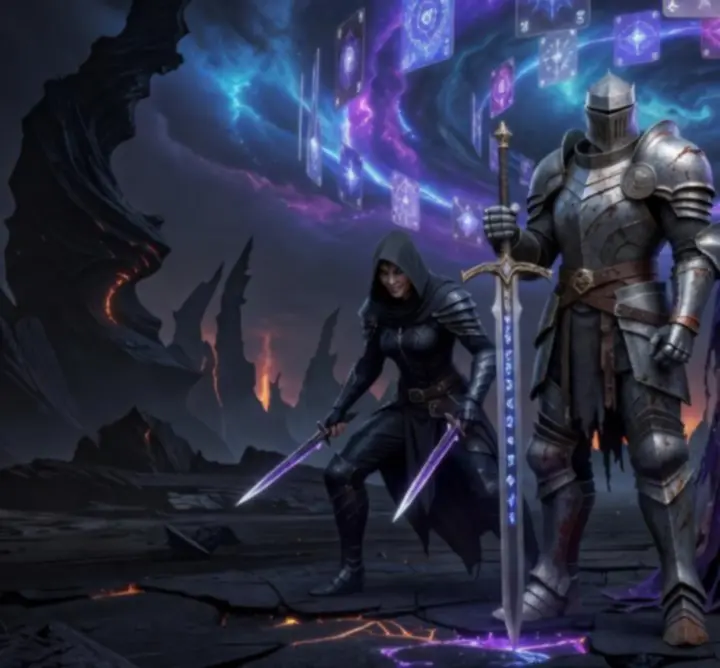
Line-up of glowing fantasy characters representing different Social Shuffle classes and archetypes.

Each Social Shuffle class brings a unique rhythm to your tactical decisions. Effective class optimization means aligning your deck with your hero's passive abilities and signature cards.

Polish meta archetypes

  • Control spellcasters: excel in long games and resource denial.
  • Aggressive duelists: push early board presence and direct damage.
  • Summoner strategists: flood the board, then buff and protect.

Upgrade priorities

Focus early resources on:

  • Core class-defining skills that every deck variant uses.
  • Cheap utility abilities that improve consistency.
  • One or two late-game finishers that match your preferred playstyle.

For class-specific recommendations and example lists, check the Characters & Classes page.

Mindset Randomness

Adaptive Play: Embracing Randomness

Tips on adapting your tactics to shuffled draws and random elements, making unpredictability an ingredient of your success.

Social Shuffle lives up to its name: shuffles, random effects, and unpredictable sequences are built into the fantasy card game experience. Competitive players in Poland learn to manage risk instead of fighting it.

Play to your outs

At key points, calculate how many cards in your deck rescue the situation. If the probability is high enough, take the risk; if it is low, look for a safer line.

Build flexible lines

  • Avoid combos that only work in one rigid order.
  • Include cards that convert bad draws into useful resources.
  • Practice "Plan A / Plan B" thinking for every major turn.
Economy Resources

Resource Management Essentials

Insights on in-game currency, energy, and critical resources to maximize your playtime and climb the rankings.

High-level strategy game players treat resources as carefully as life totals. Efficient management lets you experiment with new decks without burning out your progress.

Account-level economy

  • Prioritize crafting staple cards played across multiple archetypes.
  • Time your daily and weekly quests to match longer sessions.
  • Avoid impulsive crafting during balance patch hype; wait for the meta to stabilize.

In-match resource play

Within a single match, treat cards, mana, and health as resources to be traded:

  • Use health as a buffer to protect your card advantage when safe.
  • Spend removal only on threats that actually challenge your win condition.
  • Count future turns: will you need this resource more later than now?
Meta Counterplay

Counterplay and Meta Adaptation

Guide to anticipating opponents, reading the evolving meta, and planning counters to dominant strategies.

In competitive circles, especially within the Polish online strategy community, climbing is less about "the best deck" and more about the right deck for today's meta.

Reading the Social Shuffle meta

  • Track what you face over 10–20 games and write it down.
  • Identify the top two archetypes giving you trouble.
  • Adjust 3–4 flex slots in your list to target those decks specifically.

Designing counterplay

When building counters, aim for cards that are useful across multiple matchups but devastating in your target matchup. Avoid narrow "silver bullets" unless the meta is extreme.

For meta reports and patch reactions, keep an eye on the News & Updates page.

PvP Competitive Arena

Competitive Arena & PvP Tactics

Essential moves, bluffing tips, and tactical mind games for Social Shuffle's intense head-to-head battles.

In the arena, both PC and mobile players from across Poland collide in fast, high-stakes duels. Mechanical skill matters, but psychology often decides close games.

Information warfare

  • Track which key cards your opponent has already used.
  • Represent cards you do not have by pausing at key moments.
  • Deny information by playing flexible cards that hide your true archetype.

Positioning for tournaments

Serious PvP players in Poland often use arena matches as warm-up for weekend tournaments. Use that time to test:

  • Alternative mulligan rules against specific popular classes.
  • Greedy lines when you suspect your opponent is playing around too much.
PvE Story Mode

Solo Campaign & Story Mode Tips

Strategies for mastering single-player content, unlocking rewards, and progressing through the fantasy world.

Dark fantasy environment with a glowing path of cards guiding a hero through the Social Shuffle solo campaign.

Story mode is the perfect environment to learn the Social Shuffle mechanics while collecting resources. It is designed as a deck building guide in disguise, progressively testing different skills.

Campaign progression tips

  • Replay early chapters with stronger decks to farm safe rewards.
  • Experiment with off-meta classes to learn new interactions.
  • Save limited items for boss fights or difficulty spikes.

When you feel confident with campaign encounters, move into the competitive scene described in the Competitive Arena section.

Beginner FAQ

Beginner's FAQ and Troubleshooting

Answers to top beginner questions about rules, deck limits, gameplay pitfalls, and common errors.

How many cards should I run in my first Social Shuffle deck?
Start with the recommended default deck size. Going above the minimum usually makes your draws less consistent, which is dangerous in a shuffle-heavy game.
Is Social Shuffle free to download from this website?
No. Social Shuffle Guides is a fan and guide hub only. We do not offer downloads or any form of piracy. Purchase the game through the official PC and mobile stores, then come back here for strategies.
I keep losing to the same deck. What should I do?
Record a few matches, identify which specific cards beat you, and adjust 3–4 slots in your list. Use the meta tips in Counterplay and Meta Adaptation.
Does platform matter for strategy?
The core tactics are identical on PC and mobile. However, longer sessions on PC are often better for ranked climbing, while mobile is perfect for quick practice and daily quests.
Where can I ask for personal help in English from Poland?
Use the form on the Contact Us page or join the player discussions via the Community section.
Tools Printables

Downloadable Checklists & Infographics

Printable resources for on-the-go referencing during Social Shuffle sessions.

Use these resources alongside our deck building guide and tactical articles to structure your training. They are designed for quick reference during live games, tournaments in Poland, or mobile practice sessions.

  • Deck construction checklist – verify curve, win condition, and synergy packages before queueing.
  • Class cheat sheets – snapshot of priority upgrades and common archetypes for each class.
  • Strategic flowcharts – turn-by-turn decision trees for common matchups.

To receive the latest versions and seasonal updates, subscribe through our updates on the News page or reach out via the Contact Us page.