Gameplay & Mechanics

Master the Core Mechanics of Social Shuffle

Understand how cards, shuffling, mana, and tactical choices weave together into a deep fantasy card game experience. This page breaks down the systems that power Social Shuffle so you can outplay opponents in Poland and beyond.

Tactical gameplay Deck building guide ready Online strategy community

Core Card Mechanics

At the heart of Social Shuffle is a fantasy card game engine built around shuffling, drawing, and managing a hand of evolving cards. Each match starts with a pre-built deck that is randomly shuffled, ensuring no two games ever unfold the same way.

Your typical turn flows through three micro-phases:

  • Draw: Refill your hand from a shuffled deck, revealing new tactical options every round.
  • Plan: Evaluate mana resources, board state, and opponent threats before committing to a line.
  • Play: Deploy creatures, cast spells, or trigger artifacts while tracking how many cards remain in your deck and discard piles.

Because your hand is shaped by shuffle-driven randomness, mastering hand management is critical. Knowing when to hold back removal, when to overcommit to the board, and when to cycle cards separates casual players from serious competitors in the Social Shuffle community.

These foundations make Social Shuffle an ideal home for players in Poland seeking a polished, competitive environment where tactical gameplay is constantly influenced—but never fully controlled—by the draw of the cards.

Fantasy card deck and glowing cards representing Social Shuffle core mechanics
Every match begins with a fresh shuffle, creating new patterns of opportunity from the same deck.

Types of Cards

Social Shuffle organizes its cards into clear archetypes, making it easier to read the board and design a deck around specific win conditions. Understanding these types is a foundation for any effective deck building guide or strategy.

Card Type

Creatures

Creatures stay on the board, applying pressure turn after turn. They define tempo, board presence, and your ability to threaten lethal damage.

  • Attack and block to control combat.
  • Often carry keywords like Charge, Guard, or Lifesteal.
  • Synergize with buffs, auras, and sacrifice effects.

Card Type

Spells

Spells are one-shot effects that can swing the state of the game instantly, from direct damage to mass board resets.

  • Removal spells answer key enemy threats.
  • Draw and tutor effects sculpt the perfect hand.
  • Combat tricks reward sharp timing and bluffing.

Card Type

Artifacts

Artifacts are persistent magical objects that bend the rules of the match, offering long-term value.

  • Provide passive buffs or recurring triggers.
  • Fuel combo lines by reducing costs or duplicating effects.
  • Force opponents to alter their usual play patterns.

Card Type

Events

Events represent sudden twists of fate: realm-wide storms, temporal rifts, or war cries that affect both players.

  • Often symmetrical, reshaping the board state for everyone.
  • Introduce controlled chaos that skilled players can exploit.
  • Align perfectly with the Social Shuffle theme of shared randomness.

By mixing these types thoughtfully, you define your tactical identity—whether you prefer aggressive combat, controlling the late game, or elaborate combo lines.

Resource & Turn Economy

Social Shuffle uses a flexible resource system—most commonly referred to as mana—to gate how many cards you can play each turn. Managing this economy is crucial for optimal tactical gameplay and separates polished play from random flailing.

Mana Curve & Tempo

Your deck is built along a “curve” of costs. Low-cost cards secure early tempo; high-cost cards close games. A well-constructed curve ensures you spend close to 100% of your mana every turn.

  • Avoid hands full of cards that are all too expensive to play.
  • Include early plays to contest board control in Polish ranked queues.
  • Reserve a few flexible cards that scale in power later in the game.

Turn Structure

Each turn follows a predictable structure that you can exploit strategically:

  1. Start Phase: Resolve ongoing effects, ready exhausted cards.
  2. Draw Phase: Draw from your shuffled deck, potentially triggering draw-based synergies.
  3. Main Phase: Play cards, activate abilities, and sequence actions.
  4. Combat Phase: Declare attacks and reactions.
  5. End Phase: Discard down to hand size if necessary; set up for opponent's turn.

Expert players plan not just the current turn, but how today's plays shape their mana and hand options three turns from now.

Polish competitive players who master resource flow consistently convert even average hands into strong outcomes, demonstrating why Social Shuffle is more than just a lucky draw—it's a true strategy game.

Randomness & Shuffle: The Heart of Social Shuffle

Social Shuffle lives up to its name by fully embracing the tension between randomness and skill. Every match begins with a deck shuffle, and every turn offers a fresh draw that can unlock powerful opportunities—or force creative improvisation.

Here's how the game channels the excitement of the shuffle concept:

  • Dynamic Draws: No scripted sequences; your opening hand and subsequent draws are always unique.
  • Controlled Variance: Mulligan systems, scry-like effects, and card filtering help you sculpt your hand despite randomness.
  • Shuffle-Based Effects: Some spells reshuffle graveyards, duplicate random cards, or pull unexpected tools from your deck.
  • Shared Chaos: Global events and random effects apply to both players, rewarding those who can adapt fastest.

Because both sides play under the same shuffled conditions, Social Shuffle becomes a test of who can best predict ranges of outcomes, not exact sequences. This design embodies the core idea of an online strategy community: shared stories of impossible top-decks, dramatic comebacks, and clever risk management.

For players in Poland, where competitive scene culture is strong, this balance of luck and logic makes Social Shuffle a natural fit as a premium, replayable fantasy card game.
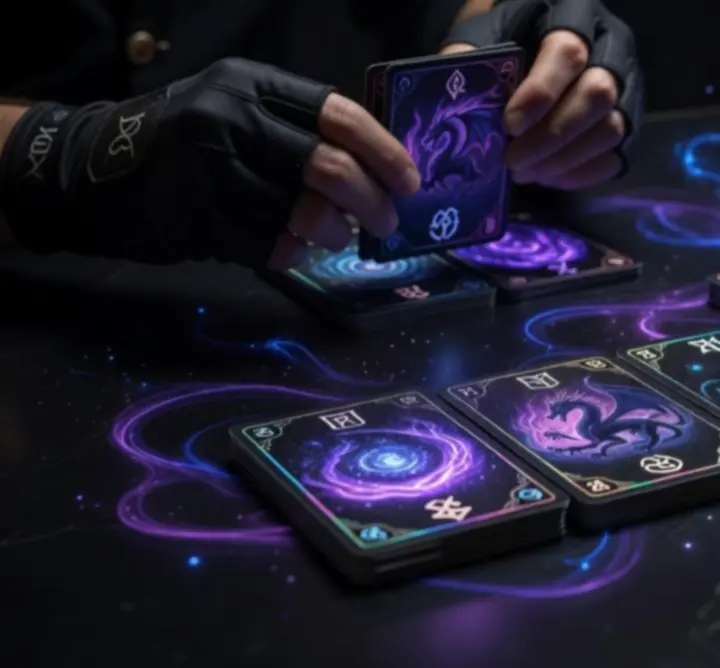
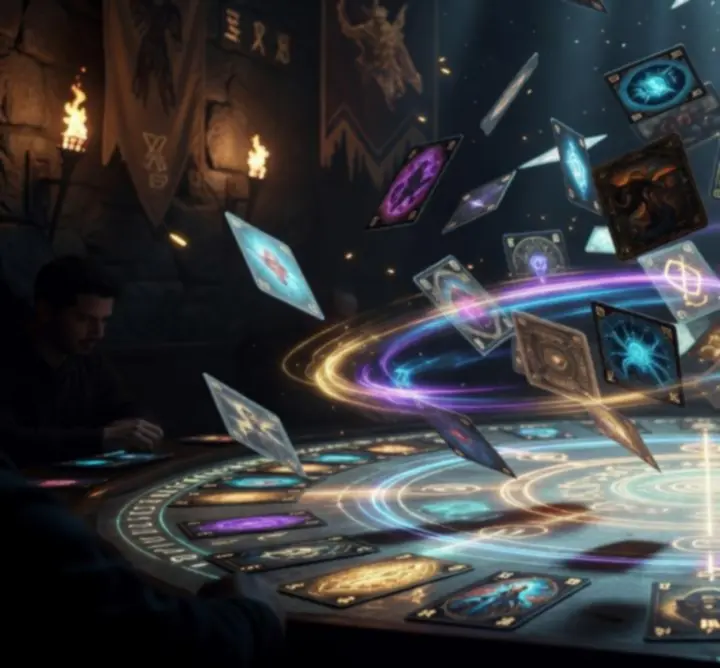
Glowing fantasy cards being shuffled mid-air representing randomness and shuffle
Shuffle-driven randomness pushes you to adapt, innovate, and outthink your opponent every game.

Synergy & Combo Systems

While shuffling introduces uncertainty, synergy and combo mechanics reward long-term planning. The best decks in Social Shuffle are built around interactions that produce more value than the sum of their parts.

Engine Building

Incremental Value

Create engines where small triggers—like drawing, playing a creature, or gaining mana—chain into repeatable advantages over many turns.

  • Card draw engines keep your hand full despite variance.
  • Token engines flood the board from a single card.
  • Cost-reduction engines unlock explosive turns.

Power Plays

Combo Finishers

Some decks aim to assemble a specific set of cards that, when played in sequence, produce a game-ending swing.

  • Multi-card damage bursts that ignore blockers.
  • Lock-out combos that limit your opponent's actions.
  • Loop-based value chains that outscale any fair strategy.

Because your tools arrive in a shuffled order, combo-focused decks must be resilient: including tutors, draw spells, and backup win conditions. Our Strategy and Guides pages expand on these ideas with concrete sample lists and matchup tips tailored for the Polish ladder.

Tactical Decision-Making

Every turn in Social Shuffle asks one central question: How will you convert this imperfect hand into the strongest possible line of play? Tactical decisions matter as much as deck building, especially in longer, grindy games.

  • When to Hold: Sometimes the correct play is restraint. Saving a removal spell for a future threat or sandbagging a board clear can swing an entire match.
  • When to Commit: Recognize windows where your opponent is unlikely to punish an aggressive push and seize the initiative.
  • When to Bluff: Leaving mana open or hovering over certain board lines can signal answers you don't actually hold, influencing how a skilled opponent reacts.
  • Playing to Outs: In losing positions, your job is to engineer board states where a specific subset of draws—your “outs”—can still win the game.

This constant decision pressure is why many players treat Social Shuffle as a digital counterpart to competitive tabletop play. It is a strategy game first and a spectacle second—ideal for streamed matches, local Polish tournaments, and friendly online rivalries.

For deeper move-by-move breakdowns, explore our Tips & Guides section, where we annotate real match scenarios from the community.

Player analyzing glowing fantasy card battlefield, representing tactical decision-making
Every action, bluff, and pass on the glowing battlefield reflects your tactical understanding of Social Shuffle.

Board State & Zones

The board in Social Shuffle is divided into distinct zones that each obey specific rules. Reading and manipulating these zones is central to advanced play.

Deck & Hand

Your deck is a hidden information zone, while your hand is a private tactical toolkit. Effects that reveal, reorder, or draw from your deck reduce uncertainty and are highly prized in competitive play.

Battlefield

The visible arena where creatures, artifacts, and ongoing events reside. Positional mechanics, lane systems, or front/back rows (depending on mode) influence which cards can attack, defend, or protect others.

Graveyard / Discard

Far from being a dead zone, the discard pile fuels recursion, reanimation, and graveyard-based combos. Many advanced decks in the Polish meta treat it as an extension of the hand.

Removed / Exiled

Cards exiled from the game are harder—or impossible—to retrieve, making exile effects premium answers to recursive threats.

Strong players constantly evaluate the board state: counting cards in each zone, tracking enemy resources, and planning how a single top-deck could change everything. Our Overview page offers a visual introduction to these layouts for new players.

Progression & Upgrades

Beyond single matches, Social Shuffle offers a layered progression system that rewards commitment and mastery. This long-term growth keeps the experience fresh for dedicated strategy fans across Poland.

  • Card Evolution: Certain cards can be upgraded, unlocking new keywords, improved stats, or alternate art that reflects your achievements.
  • Class Mastery: Characters and classes level up as you play, granting passive bonuses or access to unique class-specific cards.
  • Talent Paths: Branching progression trees let you specialize your favorite archetypes—aggressive rush, control, combo, or hybrid strategies.
  • Cosmetic Milestones: Titles, avatars, and card backs allow you to showcase your competitive history without affecting balance.

Importantly, Social Shuffle maintains its identity as a paid, premium multi-platform game, not a pay-to-win ecosystem. Progression supports expression and nuance rather than brute-force power, ensuring fair competition within the online strategy community.

Head to the Characters and Guides pages to see how progression paths influence recommended builds.

Player Interaction & Competitive Play

As its name suggests, Social Shuffle is built around interaction—between cards, between players, and between communities. The mechanics are tuned for thrilling head-to-head battles as well as collaborative theorycrafting.

Direct Interaction

Reads, Counters & Bluffs

Instant-speed spells, reactive abilities, and bluffable lines mean you're never just “waiting your turn.” Even during your opponent's actions, you're predicting, planning, and sometimes springing traps.

  • Hold answers to bait opponents into overextending.
  • Represent threats you don't actually have.
  • Use speed and priority windows to outmaneuver tight plays.

Ranked Systems

Competitive Modes

Ranked queues, seasonal ladders, and tournament modes give structure to competitive progression. Your win rate and decision quality—not your wallet—define your climb.

  • Matchmaking pairs you with similarly skilled players.
  • Seasonal resets keep the meta fresh and experimental.
  • Polish and EU-focused events highlight regional talent.

Together, these systems foster a vibrant online strategy community where players share game tips, deck techs, and meta reports. Social Shuffle isn't a download portal or free clone—it's a fan-driven hub for understanding and mastering an existing premium cross-platform title.

Next, join the discussion on our Community page or keep up with balance patches and mechanic updates on the News page.